 Save
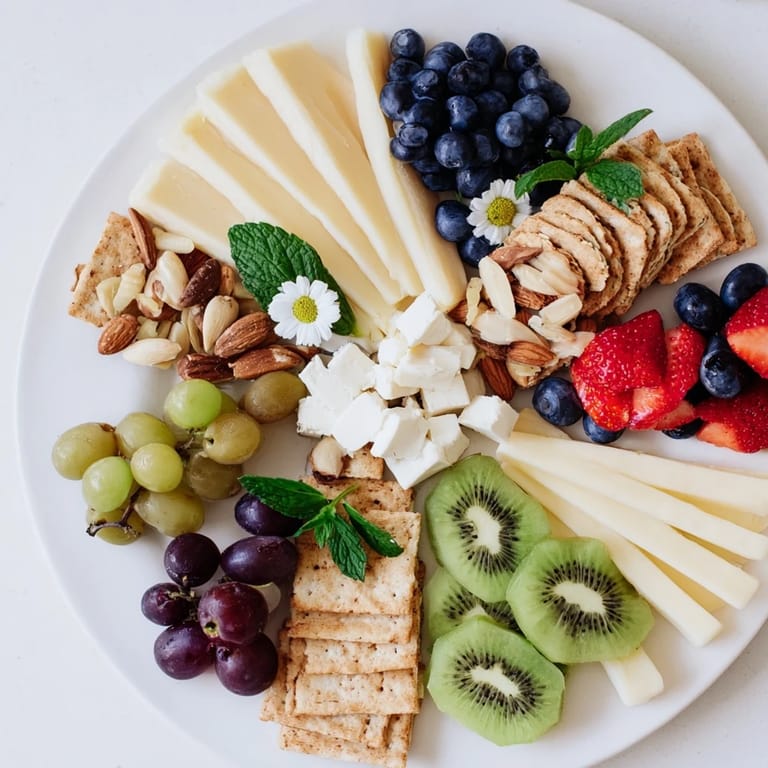
Save I'll never forget the dinner party when my friend Sarah first taught me about the art of negative space on a platter. She'd spent the afternoon meticulously arranging cheeses, fruits, and nuts around a hand-sketched star, and when she lifted the parchment guide, the blank star seemed to glow against the colorful abundance surrounding it. That simple reveal—that moment of intentional emptiness creating visual drama—changed how I thought about entertaining. The Negative Space Puzzle became my secret weapon for making guests gasp before they even tasted a thing.
I remember the first time I tried this for my cousin's engagement party. The initial star design took me longer than I expected, but watching thirty people lean in to appreciate the geometry before diving in made every minute worthwhile. Someone even asked if it was too beautiful to eat—a compliment I've chased ever since.
Ingredients
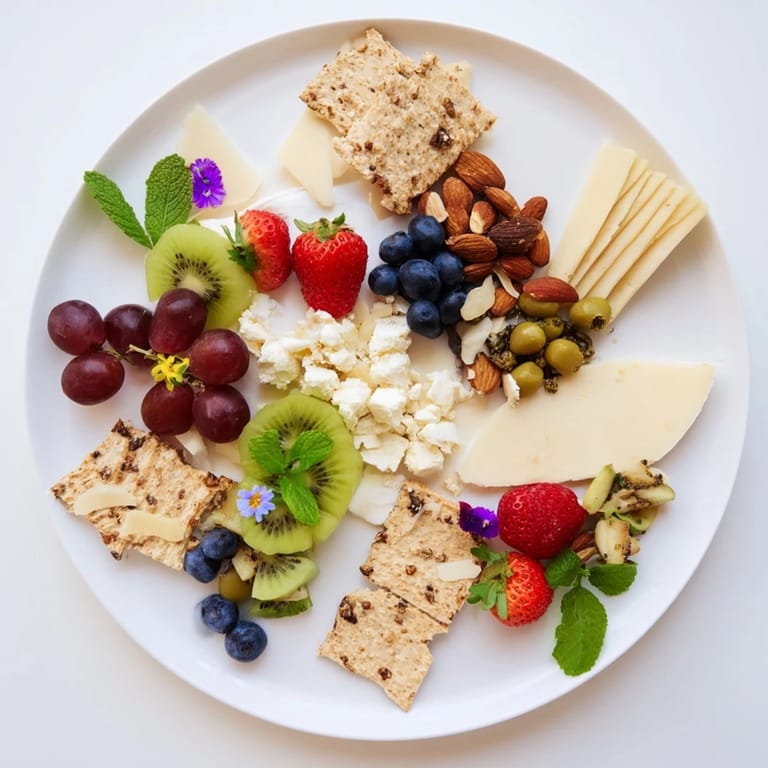
- Brie cheese, sliced (100 g): The creamy anchor that makes people pause. It spreads beautifully on crackers and its pale color creates a lovely canvas for contrast
- Manchego cheese, sliced (100 g): This Spanish cheese brings a subtle nuttiness and golden color that photographs beautifully. Its firmness makes it easy to arrange without crumbling
- Goat cheese, crumbled (100 g): The tangy surprise that keeps people coming back. Its white color is essential for creating visual definition in your design
- Seedless red grapes (1 cup): These are your jewels. Their ruby color creates instant impact, and they won't roll around if you nestle them gently
- Strawberries, halved (1 cup): Cut them just before assembly so they stay fresh and glossy. They're forgiving to arrange and add height variation
- Kiwi, sliced (1): The surprise pop of green. Slice these last—kiwi oxidizes quickly, but that slight browning won't matter once guests see the whole platter
- Blueberries (1/2 cup): These tiny spheres are your texture detectives, filling small gaps and adding a sophisticated deep color
- Thin crackers (12): Choose ones that won't overpower visually. You want them to complement, not compete with your negative space
- Roasted almonds (1/2 cup): Toast them yourself if you have time—the aroma alone sets the mood. Their irregular shapes add organic texture
- Green olives, pitted (1/4 cup): These add umami and a briny sophistication. Their shape helps define clusters
- Fresh mint leaves: Don't skip this. They're your final flourish that says you've thought of everything
- Edible flowers (optional): A scatter of pansies or nasturtiums transforms this from impressive to unforgettable
Tired of Takeout? 🥡
Get 10 meals you can make faster than delivery arrives. Seriously.
One email. No spam. Unsubscribe anytime.
Instructions
- Dream your design:
- Take a moment to visualize what shape speaks to you. A star feels celebratory. Initials feel personal. A crescent moon feels whimsical. Sketch it on parchment paper, making sure it fits your platter with breathing room around the edges. This is your moment to be bold.
- Position your guide:
- Lay the parchment on your serving platter and use small pieces of tape or just let gravity keep it in place. Step back and imagine how your eye will travel across the board. The negative space should feel intentional, not accidental.
- Build your cheese foundation:
- Start arranging cheese slices and crumbles in loose clusters, working around your parchment guide. Think of them like anchor points—they're sturdy and won't shift. Leave everything around your outlined design completely empty. This is where your patience gets rewarded.
- Layer in the fruits:
- Now comes the meditative part. Grape by grape, strawberry by strawberry, fill the remaining space around your negative shape. Notice how the colors start creating a rhythm. Arrange the kiwi slices so their green interior faces outward. Scatter blueberries into any small gaps, letting them nestle naturally.
- Add almonds and olives for texture:
- Create small piles of roasted almonds and olives, spacing them so each ingredient still has definition. This is where you transition from practical to artistic. These little pockets of different colors keep the eye moving around the board.
- The magical reveal:
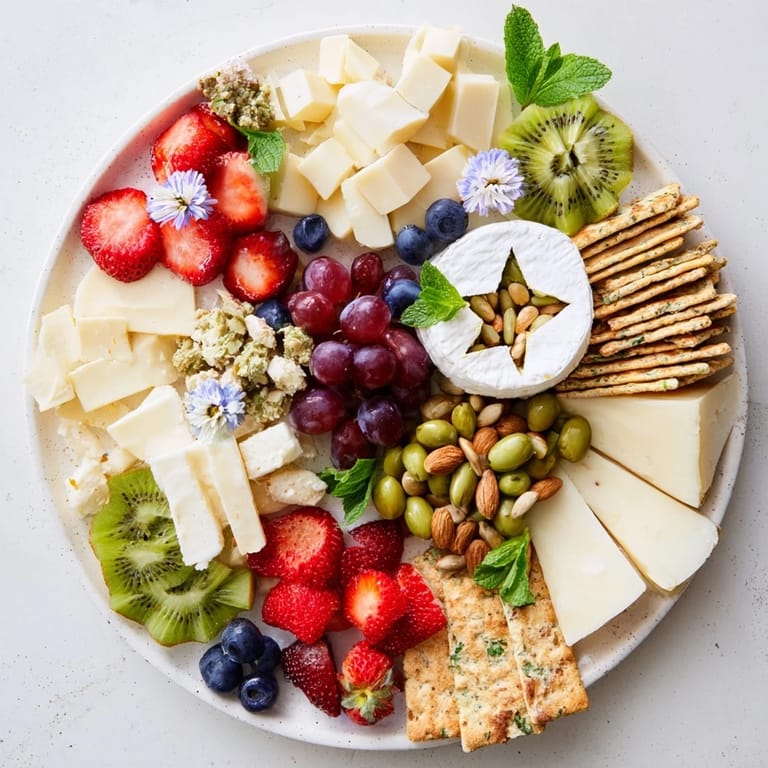
- This is the moment that makes it all worthwhile. Carefully—slowly—lift away the parchment paper. There it is: your shape, clean and crisp, surrounded by abundance. Resist the urge to touch it up. The slight imperfections are what make it honest.
- Crown it with garnish:
- Scatter fresh mint leaves across the platter as if by chance, though really you're being quite intentional about it. If you're using edible flowers, place them like you're signing your work. Step back. This is beautiful.
- The invitation to experience:
- Set this in front of your guests and give them a moment to just look. Maybe pour some sparkling wine. Let them take it in before anyone reaches for a cracker. This pause is part of the recipe.
 Save
Save There was a moment at my friend's birthday when her 8-year-old son pointed at the star-shaped empty space and said, 'It's like the food is holding the star up.' That's when I realized this isn't just about arranging food—it's about creating a conversation, a moment where everyone pauses and remembers that entertaining is about generosity and attention.
The Art of Negative Space Design
Negative space is the artist's secret. It's the part of a painting that's empty but absolutely essential. On a platter, it's no different. The empty star, moon, or initial actually draws the eye more powerfully than any cluster of food could. I learned this by accident the first time, but now I plan for it. A well-executed negative space design tells your guests that you see them as worth the extra thought. It says you believe they deserve beauty alongside sustenance. That's what separates a good board from an unforgettable one.
Variations for Every Occasion
The beauty of this platter is how it adapts. For a dessert version, I replace the cheeses with dark chocolate chunks, the crackers with almond biscotti, and the olives with candied lemon peel. The principle stays the same—the negative space still commands attention, just with sweeter companions. For a cocktail party, I go heavier on crackers and lighter on fruit. For an intimate dinner, I might spell out a guest's initials, making it a personalized gift you can eat.
Pairing and Presentation Magic
This platter sings alongside a crisp white wine or sparkling wine—something that won't overpower the delicate cheeses. If you're serving this as dessert, a light dessert wine or even champagne works beautifully. The key is to serve it immediately after arranging, while everything is at its freshest and the visual impact is strongest. I always set it out before people are seated, letting it be the first thing they admire about the meal. It sets the tone for everything that follows, whispering that you've put care into this gathering.
- Use a platter or board that contrasts with your food—a dark slate makes light cheeses pop, while a pale wood lets berries shine
- If you're arranging this hours ahead, cover loosely with plastic wrap until the last moment, protecting it from oxidation without crushing your artistry
- The negative space will stay crisp for about 2 hours, so time your reveal strategically for maximum impact
 Save
Save Every time I make this platter, I'm reminded that the best entertaining isn't about complicated techniques—it's about thoughtfulness translated into something visual and delicious. This puzzle, with its empty space that somehow says more than fullness, has become my love letter to the people I cook for.
Recipe FAQ
- → How do I create the negative space design on the platter?
Sketch your desired shape lightly on parchment paper and place it on the serving board as a guide while arranging ingredients around it.
- → Can the platter be adapted for dietary restrictions?
Yes, use gluten-free crackers and substitute cheeses with dairy-free alternatives or replace savory items to suit dietary needs.
- → What ingredients work best for maintaining clean negative spaces?
Firm cheeses, clustered crackers, and firm fruits like grapes and berries help define clear shapes and contrasts.
- → Is this platter suitable for a dessert presentation?
Absolutely, swap cheeses and crackers with chocolates, biscotti, and dried fruits for a sweet variation while preserving the design concept.
- → How should I garnish the platter for the best visual impact?
Add fresh mint leaves and edible flowers around the edges to enhance color contrast and freshness.