 Save
Save I discovered the power of emptiness the day a friend brought home a long slate board from an art fair. She arranged cheese, vegetables, and crackers on opposite ends with nothing between them, and something about that void made the whole thing sing. It wasn't cluttered or fussy—it was intentional. That single image stayed with me, and I realized I'd been overcomplicating hospitality. Sometimes the most generous thing you can offer is space and restraint.
The first time I made this for two people who barely knew each other, they sat across from the board and the silence wasn't awkward—it became this shared moment of paying attention. By the time they'd worked through the vegetables and cheese, they were already laughing and talking like old friends. I think the board had done something my small talk never could.
Ingredients
- Fresh cucumbers: Slice them just before assembling so they stay crisp and cool, almost snappy between your teeth. The watery crunch matters here.
- Baby carrots: Look for ones that are roughly the same size so both sides of your board feel visually balanced and intentional.
- Radishes, halved: Their peppery bite is what keeps this from feeling too delicate or one-note—they're your wake-up call on the board.
- Goat cheese: Roll it into small, walnut-sized rounds with your fingers or a tiny spoon; the irregularity is more honest than perfect spheres.
- Gluten-free crackers: Choose ones with texture and substance, not thin, bland ones that disappear. They're part of the architecture.
- Roasted almonds: Their toasted warmth contrasts beautifully with the cool vegetables and makes the whole thing feel more substantial.
- Seedless red grapes: Their sweetness is the gentle surprise that arrives at the very end of the tasting journey.
- Fresh herbs: Chives or dill add a whisper of aroma and break up the visual blocks with green softness.
Tired of Takeout? 🥡
Get 10 meals you can make faster than delivery arrives. Seriously.
One email. No spam. Unsubscribe anytime.
Instructions
- Find your canvas:
- Choose a long wooden or slate board—something that feels heavy and permanent in your hands. Place it centered where it will be seen, not hidden to the side of a table.
- Arrange one side with intention:
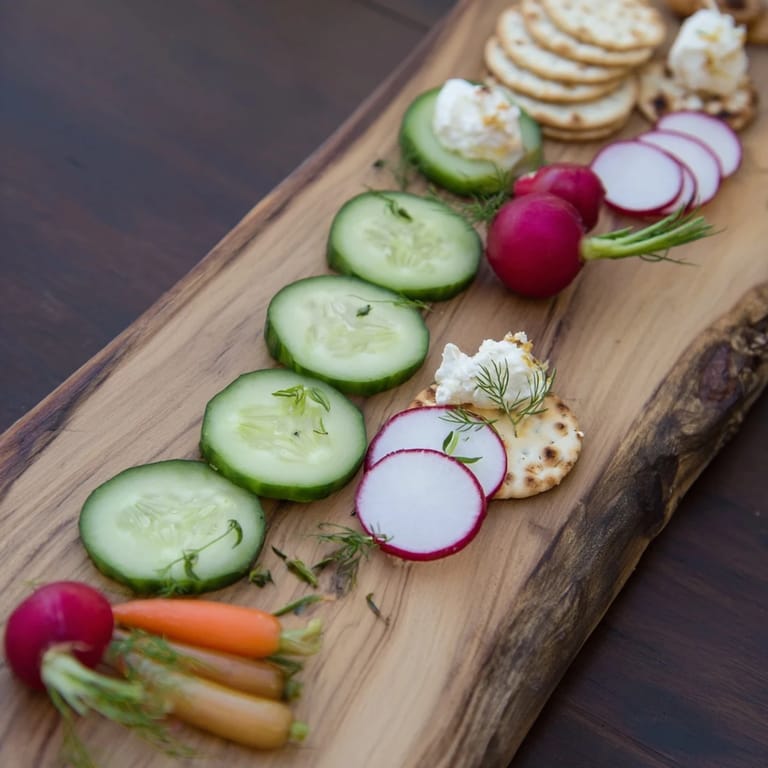
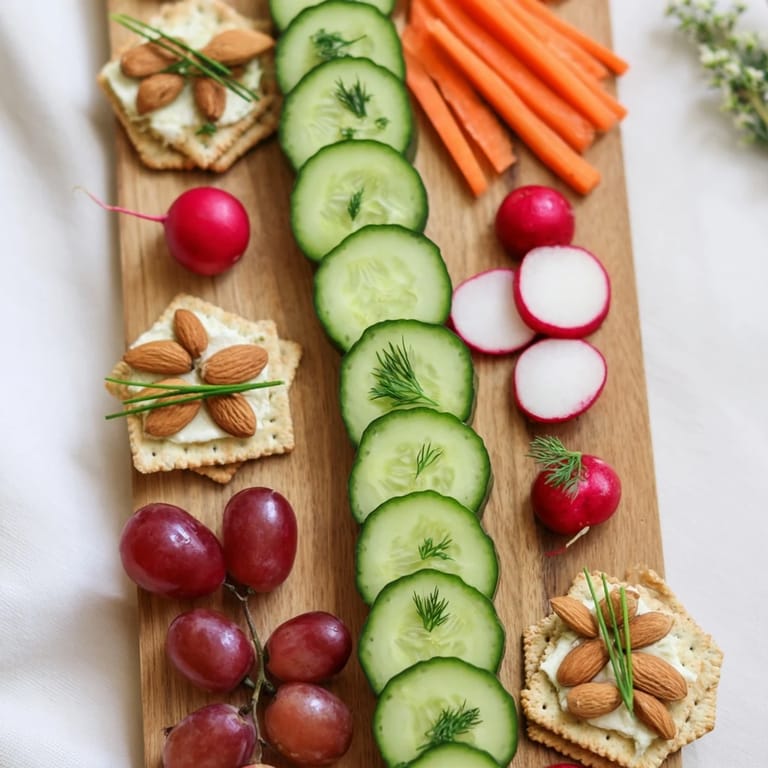
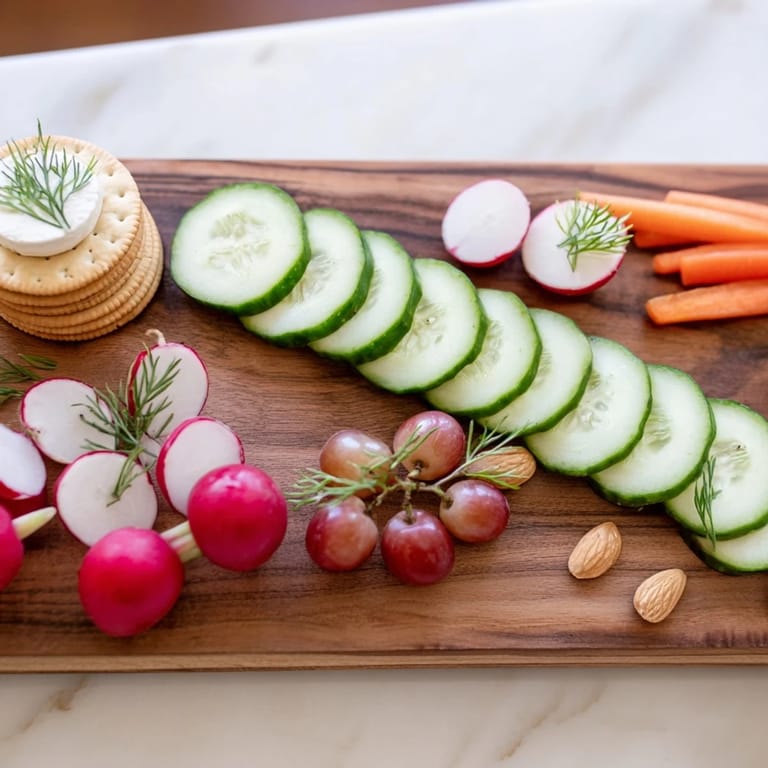
- Start with cucumber slices as your foundation, then build your pile by adding crackers, carrots, radishes, grapes, a generous portion of goat cheese, and half the almonds. Nestle each piece so they lean slightly into one another, creating a gentle, organic cluster rather than a sterile line.
- Mirror perfectly on the other end:
- Use your remaining ingredients to create an exact reflection on the opposite end of the board. This isn't about mathematical precision—it's about feeling balanced when you step back and look at the whole thing.
- Crown with herbs:
- Tuck a few sprigs of fresh herbs into each pile, just enough to add color and a hint of fragrance without hiding the ingredients beneath.
- Respect the emptiness:
- Leave the center of the board completely bare. This space is doing work—it's what makes the two sides feel like a conversation rather than a collection.
- Present with permission:
- Bring the board to the table and pause for just a moment before diving in, letting people absorb what they're seeing before they start eating.
 Save
Save A guest once told me that looking at that board felt like meditation, and that the first thing they noticed was what they weren't eating—all that empty space made them actually taste their food instead of just consuming it. That's when I understood this wasn't really about the ingredients at all.
The Geometry of Generosity
When you arrange food this way, you're making a statement about how you think people should eat together. You're saying that equality matters, that slowness matters, that beauty matters. Every ingredient on one side has a twin on the other, which means no one's experience is less thoughtful than anyone else's. It's a small thing, but it changes the entire mood of a meal.
Pairing and Timing
This dish is best served with something crisp and light—a Sauvignon Blanc or a sparkling water with lemon. The wine's acidity cuts through the creaminess of the cheese and echoes the brightness of the vegetables. Timing matters too; serve it as soon as it's arranged, when everything is at peak crispness and the presentation still feels fresh and alive.
Variations and Seasons
Once you understand the principle, you can build this board around whatever your garden or market is offering. In spring, try radish greens and young beets; in summer, ripe stone fruits and fresh berries; in autumn, roasted beet slices and candied nuts. The formula stays the same—balance, symmetry, restraint—but the flavors shift with the season.
- For a vegan version, replace goat cheese with cashew cream rolled into balls and chilled until firm.
- You can prep ingredients hours ahead, but don't arrange the board until just before serving to keep everything at its best.
- If you're feeding more people, simply scale the recipe up and create multiple pairs of piles rather than stretching one board too thin.
 Save
Save This is the kind of dish that teaches you something about how you want to live. It's a reminder that sometimes less is infinitely more beautiful, and that feeding people well has less to do with quantity than with attention.
Recipe FAQ
- → What type of board is best for this dish?
A long wooden or slate board (at least 60 cm) works best to create the balanced visual effect.
- → Can this dish accommodate dietary restrictions?
Yes, it suits vegetarian and gluten-free diets; plant-based cheese alternatives can make it vegan-friendly.
- → How should the ingredients be arranged?
Arrange half of each ingredient neatly at one end of the board and mirror the arrangement exactly at the other end, leaving the center empty.
- → Which herbs are recommended for garnish?
Fresh chives and dill add color and a pleasant aroma to the presentation.
- → What is a suggested beverage pairing?
A crisp white wine like Sauvignon Blanc complements the freshness and balance of the dish.